Commandments?
- Feb 28, 2024
- 5 min read
Updated: Feb 29, 2024
10 commandments. That's what a certain man named Dieter Rams thinks must be followed to produce a great design.
Here they are:

I think I am getting a bit ahead of myself here. Maybe I am just a bit excited. I don't think there is a more influential product designer than Dieter Rams. He was also the first product designer I ever looked into. So, before looking at a few of those commandments in more detail, let's take a look at his life so far.
Dieter Rams is a German born product designer. However, I prefer his nickname, "Mr Braun". It was a Braun where I believe Dieter made his biggest impact, designing some of the most iconic and influential products of the time. I believe this was due to a clear symbiotic relationship between the company and the man. Both Braun and Dieter believed in a minimalist design philosophy where the products were both functional and extremely user-friendly.
Just look at some examples from his Braun range:

Just be looking at these products I know exactly what each of them are, and I could take a really good guess at how to operate them. It is clear that intuitive, user-centric design is at the forefront of Dieter Rams' approach.
This all took place from the 50s into the 70s, however, coming into the late 70s Dieter became extremely concerned with the world of design that surrounded him, saying it was an "impenetrable confusion of forms, colours and noises". Rams believe that the world of design had to be simplified, stripped back to bare bones to inform better design for the future. This is where his "10 commandments came in".
So why is this important to know and where have they been used before? Well I think the best way to show this is to give my opinion on a few of his commandments and show some products that emphasise them.
1 - Good Design is Innovative

Yes. A Tesla that is the exact thing I want to use to describe innovative design. This isn't going to be some endless rant about how technologically advanced the Tesla Model X is. The reason this car is such a good example of innovative design is the fact that it is a completely different way of looking at what a car is. Most people look at a car as something that gets you from A to B but I believe a Tesla aims to do this in the most enjoyable way possible. This is done through its simple and inviting exterior design style and extremely minimalist interior. There are no fancy buttons or difficult to understand controls. It's features are also completely different to that of a "traditional car", the ability to play games on the touchscreen, the autopilot feature and the gullwing doors. While these contrast with the minimalist design style they add to the user experience and really show how a Tesla is a completely different way of looking at what a car actually is.
I mean just look at these electric cars:

Do they not all just have the same design language as the Tesla...? I think they do. That is when you know your design is innovative, when others follow you!
6 - Good Design is Honest
Before I look at an example of this lets discus what Dieter means by this statement... I think it really stems from the way a product communicates its purpose. Remember earlier when I showed some examples of Dieter Rams' Braun products and said, "I know exactly what each of those products are and I could take a really good guess at how to operate them". This is what I mean by products that communicate their purpose.
There are lots of products that I believe do this but I am actually going to use one of Mr Rams' to show it. After joining Braun Dieter asked Edwin Braun if he could design furniture for Niels Vitsoe with Edwin saying "Yes! It will help the market for our radios!" Dieter Rams and Vitsoe ended up producing some amazing pieces together and the one I want to help show communicative, honest design is The Vitsoe 606 shelving unit.

If you have never seen this product before you may be thinking that it is just an ordinary shelving unit. Where is the great design in that? Well... just watch this video from Vitsoe and tell me if you still think it is ordinary:
While I think you can now understand that this is a great example of modular, flexible design but how is it honest to the user. Well, users can see exactly how each of the individual parts fit together, which in turn creates an honest portrayal on the functionality of the shelving unit. This clarity of purpose is also show through the clear design aims of the product - storage and display. The art isn't in the way the shelves look, it is in the way they show off what is placed on them, giving a sense of ambiguity to the product. Users know exactly what the function of the shelving unit as soon as they see it.
It is for these reasons that it is a superb example of an honest and straightforward design.
10 - Good Design is as Little as Possible
This is probably one of the most famous of Dieter Rams' 10 commandments. It really focuses in on that minimalist yet functional design language that Dieter embodies.
I think that the best example of this isn't a car or a shelving unit but it is the Google homepage:
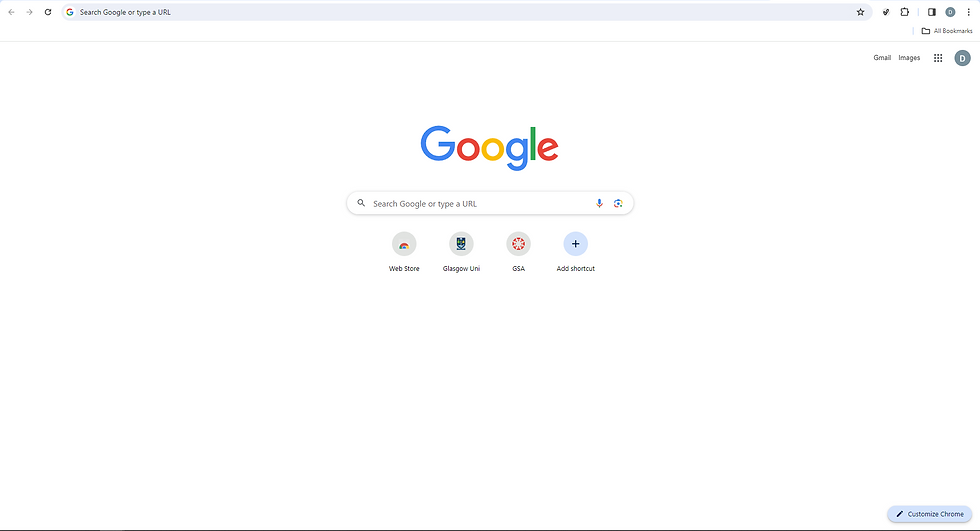
The first thing I notice with it is the sheer amount of white space. This creates a focus on the key feature of the design... the search bar. This page has plenty of other functions but Google understands that the vast majority of its users just want to look something up. This idea of stripping away unnecessary features and items ensures that the search bar is seen as the core purpose of the page. This improves the overall user friendliness of the design and highlights the importance of minimal design language.
There we go... a little insight into "Mr Braun". I personally think that while his 10 commandments are probably the best set of rules that exist for product designers, we need to be sure that the context we are designing for actually requires them. Also, we must ensure that when we are implementing them they do not impact the desired output of the project.
However, if we can implement them correctly they serve as a great base to design a fantastic product.
So thanks for that, Dieter Rams:


Comments